




How to Choose a Good Extra Virgin Olive Oil: 10 Things to Look For
You are standing in front of a supermarket shelf filled with olive oil. There may be ten bottles or there may be fifty. One oil looks deep green,…
07 FEBRUARY 2026
Table of contents
- 1. Start with Extra Virgin Olive Oil
- 2. Check Where the Olive Oil Really Comes From
- 3. Look for the Harvest Date
- 4. Do Not Judge Olive Oil by Its Colour
- 5. Check the Acidity, but Do Not Judge the Oil by Acidity Alone
- 6. Look at the Polyphenol Content
- 7. Choose Packaging That Protects the Olive Oil
- 8. What Does Cold Extracted Olive Oil Actually Mean?
- 9. Do Not Be Afraid of Bitterness and a Peppery Finish
- 10. Price Matters, but It Does Not Guarantee Quality
- What About Organic Extra Virgin Olive Oil?
- How to Choose Extra Virgin Olive Oil in the Shop
- How Can You Tell If Extra Virgin Olive Oil Is Good After Opening It?
- Does the Best Olive Oil Have to Be the Strongest?
- Summary: What Should You Look for When Buying Extra Virgin Olive Oil?
You are standing in front of a supermarket shelf filled with olive oil. There may be ten bottles or there may be fifty. One oil looks deep green, another golden. One label says extra virgin, another highlights its Mediterranean origin, while another focuses on organic certification or cold extraction.
Which one should you choose?
Should you look at the price, colour, country of origin, acidity or simply choose the bottle with the most convincing label?
Choosing a good extra virgin olive oil does not need to be complicated. Once you know what information actually matters, it becomes much easier to separate useful quality indicators from attractive marketing.
Good extra virgin olive oil is much more than a cooking fat. Its quality can depend on the olive variety, growing region, condition of the fruit, harvest timing, milling, extraction, storage and the time that has passed since harvest.
Here are 10 things worth checking when you choose extra virgin olive oil.
1. Start with Extra Virgin Olive Oil
If quality, flavour and the natural characteristics of olive oil matter to you, the words extra virgin olive oil are the best place to start.
Extra virgin is not simply a marketing expression. It is a recognised category of olive oil.
Producers obtain virgin olive oils directly from olives using mechanical or other physical methods. To qualify as extra virgin, the finished oil must also meet defined chemical and sensory standards.
This distinguishes extra virgin olive oil from refined olive oils and products that combine refined olive oil with virgin olive oils.
Refining creates a more neutral product, but it also removes much of the aroma, flavour and many of the naturally occurring minor compounds that make fresh extra virgin olive oil distinctive.
If you want olive oil for its flavour, aroma, natural polyphenols and character, choosing genuine extra virgin olive oil should therefore be your starting point.
2. Check Where the Olive Oil Really Comes From
Origin can tell you a great deal about an olive oil.
A broad statement of origin gives you less information than a label that identifies a particular country, region, estate or olive variety.
This matters because the character of olive oil begins in the olive grove.
Several factors can influence the finished oil, including:
- olive variety,
- climate,
- soil,
- rainfall,
- sunshine,
- altitude,
- harvest timing,
- local growing conditions,
- production methods.
Crete provides a good example. The island has a long history of olive cultivation and widespread production of the Koroneiki variety. Koroneiki olives can produce aromatic extra virgin olive oils with fresh green notes, pleasant bitterness and a distinctive peppery finish.
However, origin alone does not guarantee quality. An olive oil does not become exceptional simply because it comes from a famous country or region.
Harvesting, milling, extraction and storage still matter enormously.
If you want to understand this relationship in greater detail, read our guide to how the growing region influences the taste and quality of olive oil.
Information such as single estate or a clearly identified producer can also provide additional traceability. It does not automatically make one oil better than another, but it gives you a clearer picture of where the olives came from.
3. Look for the Harvest Date
The harvest date is one of the most useful pieces of information you can find when buying extra virgin olive oil.
Consumers often look only at the best before date, but the best before date and harvest date tell you different things.
The best before date relates to the expected shelf life of the product when stored correctly.
The harvest date tells you when the olives used to make the oil were picked.
Why does this matter?
Unlike wine, extra virgin olive oil generally does not improve with age. Its fresh aromas gradually become less intense, while natural antioxidants and phenolic compounds slowly decline during storage.
Light, oxygen and heat can accelerate this process.
When you have the choice, an olive oil from a recent harvest usually gives you more useful information about freshness than a best before date alone.
Harvest timing also matters during production. Olives picked earlier in the season can produce a different flavour profile and composition from fully ripe fruit. The exact result depends on the variety, climate and growing conditions.
You can learn more about the difference between these two dates in our guide to olive oil harvest dates and best before dates. You can also see what happens between harvesting and bottling in our guide to how organic extra virgin olive oil is made.
4. Do Not Judge Olive Oil by Its Colour
This is one of the most common olive oil myths.
Is a bright green olive oil better than a golden one?
Not necessarily.
The colour of olive oil can vary naturally. Olive variety, ripeness and natural pigments such as chlorophylls and carotenoids can all influence its appearance.
A green olive oil may look fresher, but colour alone tells you very little about whether the oil meets the standards for high quality extra virgin olive oil.
Professional olive oil tasting goes even further. Tasters use dark coloured tasting glasses designed to prevent the colour of the oil from influencing their sensory assessment.
This allows them to concentrate on what really matters: aroma, fruitiness, bitterness, pungency and the presence or absence of sensory defects.
So when choosing olive oil, do not assume that greener automatically means better.
5. Check the Acidity, but Do Not Judge the Oil by Acidity Alone
Acidity is one of the most frequently discussed measures of olive oil quality.
Extra virgin olive oil must have free acidity of no more than 0.8%, expressed as oleic acid.
Premium extra virgin olive oils can achieve levels considerably below this limit.
Low acidity can indicate that producers used healthy olives and handled them carefully before extraction. Damaged fruit, poor storage before milling and long delays between harvesting and processing can all contribute to higher levels of free fatty acids.
However, extremely low acidity does not automatically make an olive oil exceptional.
Acidity is only one laboratory measurement. Extra virgin olive oil must meet several chemical requirements and also satisfy sensory standards.
Another common misunderstanding concerns flavour. Olive oil acidity does not tell you whether the oil will taste acidic or sour.
Our detailed guide to olive oil acidity and what it really means explains why this number matters and why it should never stand alone as a measure of quality.
6. Look at the Polyphenol Content
If you are interested in the natural composition of extra virgin olive oil, polyphenols are worth understanding.
Polyphenols are naturally occurring plant compounds found in olives and extra virgin olive oil. They contribute to the oxidative stability of the oil and also influence its sensory character.
The amount of polyphenols in an olive oil can depend on many factors, including:
- olive variety,
- harvest timing,
- climate,
- condition of the fruit,
- growing conditions,
- milling and extraction,
- storage time and conditions.
Polyphenols also help explain why some good extra virgin olive oils taste bitter or create a peppery sensation at the back of the throat.
That pepperiness does not necessarily indicate a problem. Compounds such as oleocanthal contribute to the characteristic pungency found in many fresh olive oils.
If a producer publishes laboratory tested polyphenol information, it can give you another useful piece of information about the oil. Remember, however, that polyphenol concentration changes naturally between varieties, harvests and during storage.
Our guide to polyphenols in olive oil explains their relationship with flavour, stability and olive oil quality in much more detail.
7. Choose Packaging That Protects the Olive Oil
Extra virgin olive oil has three important enemies: light, oxygen and excessive heat.
Packaging therefore matters.
Good options include:
- dark glass bottles,
- metal tins,
- other food safe containers that limit exposure to light.
A completely clear glass bottle may look attractive on a supermarket shelf, but it offers less protection from light.
Light can accelerate oxidation and gradually affect the aroma, flavour and natural composition of the oil.
The way the shop stores the bottle matters too.
Even excellent extra virgin olive oil can deteriorate faster if the retailer leaves it for long periods in direct sunlight, under intense lighting or next to a strong source of heat.
After buying it, keep the same principle in mind at home. Store olive oil in a cool, dark place and close the container properly after each use.
8. What Does Cold Extracted Olive Oil Actually Mean?
Terms such as cold pressed and cold extracted appear frequently when people shop for olive oil, but they are not exactly the same thing.
Modern olive oil production normally uses centrifugation rather than traditional hydraulic pressing.
For this reason, cold extracted is often the more accurate term for olive oil produced in a modern mill.
Under European olive oil rules, the term cold extraction applies to virgin or extra virgin olive oil obtained below 27°C by percolation or centrifugation of the olive paste.
The term first cold pressing has a more specific meaning. It refers to oil obtained below 27°C during the first mechanical pressing of olive paste using a traditional hydraulic press.
Temperature matters because excessive heat during extraction can affect delicate aromas and naturally occurring compounds.
However, temperature is only one part of production quality.
Excellent olive oil begins with healthy fruit. Producers also need to harvest carefully, transport the olives quickly, mill them promptly, control extraction and protect the finished oil during storage.
This is why it makes more sense to consider the entire production process rather than judge an olive oil from a single phrase on the front label.
Our grove to bottle guide explains each stage of this process.
9. Do Not Be Afraid of Bitterness and a Peppery Finish
Many people assume that the smoothest and mildest olive oil must also be the best.
That is not how professional olive oil assessment works.
A good extra virgin olive oil can offer aromas that remind you of fresh grass, herbs, green tomato, olive leaves, artichoke, ripe fruit or other fresh plant notes.
It may also taste:
- fruity,
- pleasantly bitter,
- peppery,
- pungent,
- fresh and herbaceous.
Bitterness and pungency are recognised positive sensory attributes when they form part of a balanced olive oil.
The intensity can vary greatly. Some consumers prefer a soft and delicate style, while others enjoy an intensely green oil with obvious bitterness and a strong peppery finish.
Neither preference alone determines quality.
What you should avoid are genuine sensory defects. Rancid, musty, stale or unpleasant fermented aromas can indicate deterioration or problems during production and storage.
If you have always chosen olive oil simply because it tastes extremely mild, try comparing it with a fresher and more expressive extra virgin olive oil.
You may discover how much variety exists between different olive oils.
10. Price Matters, but It Does Not Guarantee Quality
Why can one bottle of extra virgin olive oil cost considerably more than another?
Many factors influence the final price, including:
- cost and quality of the olives,
- olive variety,
- harvesting method,
- harvest timing,
- oil yield from the fruit,
- milling and extraction,
- storage,
- packaging,
- transport,
- certification,
- scale of production.
Producing high quality extra virgin olive oil can be expensive.
Earlier harvested olives, for example, can produce less oil than fully mature fruit. Depending on the variety and growing conditions, they may also produce a greener, more intense oil with a different phenolic profile.
Small estate production, careful harvesting, rapid processing and controlled storage can also add cost.
For this reason, an unusually cheap extra virgin olive oil should encourage you to look more closely at its origin, packaging and other information.
At the same time, an expensive bottle is not automatically an exceptional bottle.
Price is one clue. It should never be your only quality test.
What About Organic Extra Virgin Olive Oil?
Organic certification adds another useful piece of information, but it is important to understand exactly what it means.
Organic and extra virgin do not mean the same thing.
Extra virgin describes the category of olive oil and requires the oil to meet defined chemical and sensory standards.
Organic certification concerns how producers grow, handle and document the olives and olive oil under recognised organic standards.
An olive oil can therefore be extra virgin without being organic. It can also carry organic certification while still varying considerably in flavour, acidity, polyphenol concentration and overall sensory character.
Organic certification does not automatically prove that one olive oil tastes better than another.
What it does provide is an independently controlled system covering organic production and handling.
For products labelled as organic in Great Britain, look for the relevant organic control body code on the label. These codes normally follow the format GB-ORG-XX.
You may also see the green EU organic leaf on qualifying products. Where the EU organic logo appears, certification and agricultural origin information accompany it according to the applicable labelling rules.
The most informative olive oil labels often combine several useful details. For example, an oil may be extra virgin, certified organic, produced from a named olive variety, sourced from a specific region and traceable to a single estate.
Together, these details provide a much clearer picture than one marketing phrase on its own.
How to Choose Extra Virgin Olive Oil in the Shop
You do not need to spend several minutes analysing every bottle on the shelf.
A quick check can tell you a surprising amount.
1. Does it say extra virgin olive oil?
Start with the recognised category rather than vague expressions such as premium or natural.
2. Can you identify where the olives came from?
A specific country, region, producer or estate provides more traceability than a very broad origin statement.
3. Is there a harvest date or harvest year?
If so, it can help you judge how recent the oil is.
4. Does the packaging protect the oil from light?
Dark glass and metal tins are practical choices.
5. Does the producer identify the olive variety?
Knowing whether the oil comes from Koroneiki, Arbequina, Picual or another variety tells you more about the product inside the bottle.
6. Is there useful information about production?
Harvesting, prompt milling, controlled extraction and storage all help build a clearer picture of quality.
7. Does the producer provide acidity or polyphenol information?
These measurements can add useful context, but neither number should become your only reason for choosing an oil.
8. If it is organic, can you identify the certification?
Look for the appropriate organic certification details and control body code.
9. Is the oil being stored properly?
A good bottle left in strong sunlight or excessive heat can deteriorate faster.
10. Does the information justify the price?
Look at the whole product rather than assuming the cheapest or most expensive bottle must be the right choice.
How Can You Tell If Extra Virgin Olive Oil Is Good After Opening It?
The label can tell you a great deal, but tasting the olive oil provides another layer of information.
Pour a small amount into a glass or onto a clean plate and smell it before tasting.
Fresh extra virgin olive oil should have a recognisable aroma. Depending on the variety and style, you might notice green leaves, grass, herbs, tomato, artichoke or ripe fruity notes.
When you taste it, pay attention to fruitiness, bitterness and pungency rather than looking only for smoothness.
A pleasant peppery sensation at the back of the throat can be completely normal, especially in olive oils with noticeable phenolic character.
One of the easiest ways to appreciate the flavour of a good olive oil is to use it in a simple dish where other ingredients do not overpower it.
Try it with ripe tomatoes and bread in our Bruschetta Romana recipe, or use it as the main dressing in our Mediterranean Chickpea Salad with Feta and Oregano.
Simple recipes like these make differences in aroma, bitterness and pepperiness much easier to notice.
Does the Best Olive Oil Have to Be the Strongest?
No.
Personal preference still matters.
Some people enjoy intensely green, bitter and peppery extra virgin olive oils. Others prefer a softer oil with ripe fruit aromas and only gentle bitterness.
Quality and intensity are not the same thing.
A mild olive oil can still be excellent when it is fresh, balanced and free from defects. An intense olive oil can also be exceptional when its fruitiness, bitterness and pungency work together harmoniously.
The olive variety and growing environment play an important role in these differences. Our guide to olive oil growing regions and flavour explains why oils from different places can develop such different sensory profiles.
Summary: What Should You Look for When Buying Extra Virgin Olive Oil?
Choosing a good extra virgin olive oil becomes much easier once you know which details deserve your attention.
Start with the extra virgin category, then look beyond the words on the front of the bottle.
Check the origin. Look for harvest information. Consider the olive variety, acidity, polyphenol information, extraction method, packaging and certification.
Do not judge olive oil by colour alone, and do not assume that a mild oil must be better than a bitter or peppery one.
Remember that no single number tells the entire story.
Very low acidity is useful information, but it does not replace sensory quality. High polyphenol content can be interesting, but balance still matters. A famous region may produce outstanding olive oil, but careful harvesting and production remain essential.
The best approach is to consider all these factors together.
A clearly identified origin, recent harvest, careful production, protective packaging, good traceability and a fresh, balanced sensory profile give you a much better basis for choosing extra virgin olive oil than price, colour or packaging design alone.
And once you find an olive oil you genuinely enjoy, use it. Good extra virgin olive oil belongs on the table, in the kitchen and in everyday food.
See similar articles
Extra Virgin Olive Oil Guide 26 APRIL 2026
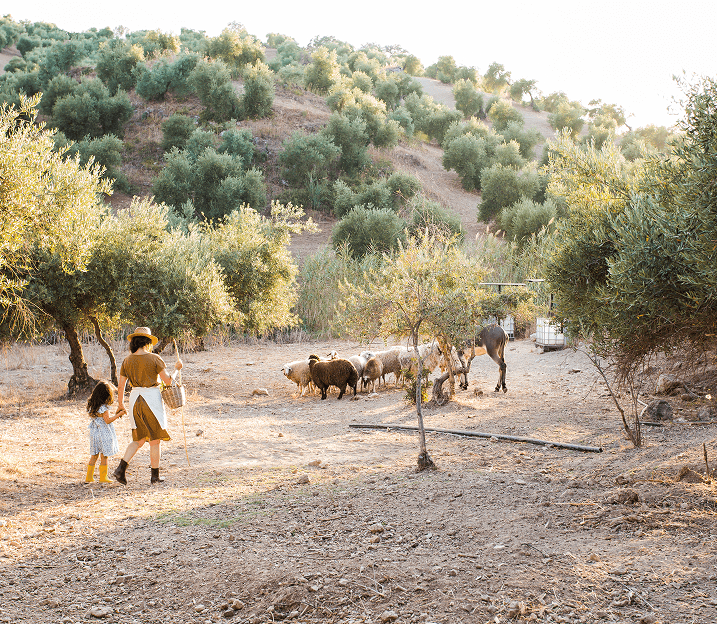
Why Is Crete Famous for Olive Oil? The Story of Cretan Olive Oil
Some landscapes are so distinctive that you can recognise them without looking at a map. Across…
Read more
Extra Virgin Olive Oil Guide 09 MARCH 2026
What Does Organic Olive Oil Mean? A Guide to Certification and Labels
Pick up a bottle of olive oil today and you may notice a small green leaf…
Read more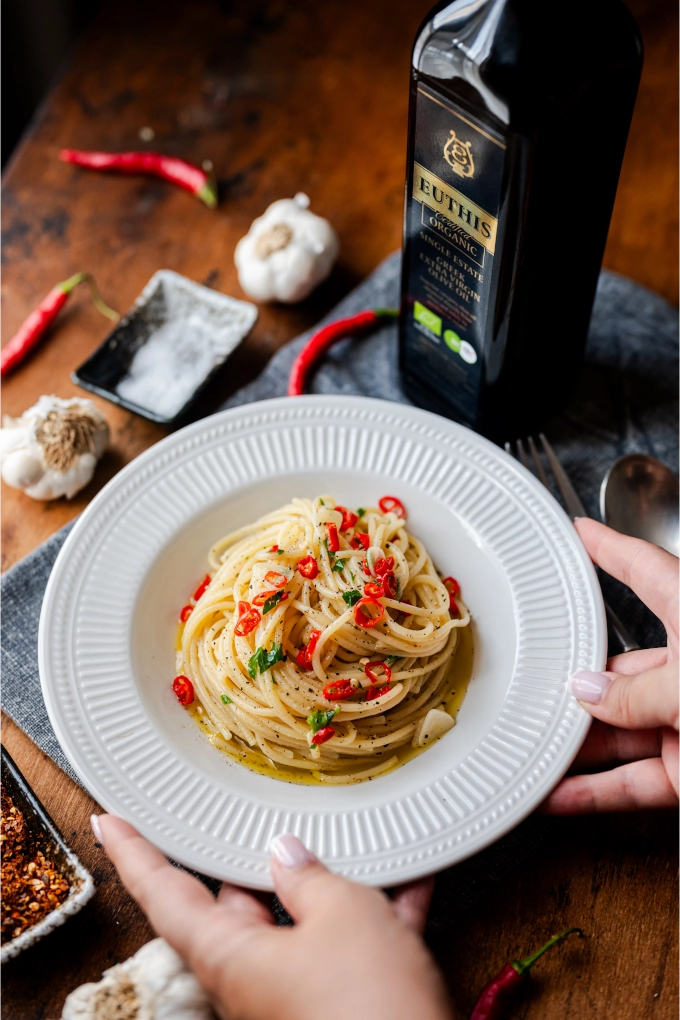
Extra Virgin Olive Oil Guide 18 JANUARY 2026
Cooking with Extra Virgin Olive Oil: How to Use It Every Day
Imagine a simple Mediterranean dinner. Ripe tomatoes, fresh herbs, a piece of good bread and a…
Read more

EUTHIS combines organic cultivation, Koroneiki single varietal character, cold extraction, and single estate traceability. It is produced with clear standards and handled to protect freshness through to final packaging.