


Why Is Crete Famous for Olive Oil? The Story of Cretan Olive Oil
Some landscapes are so distinctive that you can recognise them without looking at a map. Across Crete, silver green olive trees stretch over hillsides, valleys and dry Mediterranean…
26 APRIL 2026
Table of contents
- How Long Have Olive Trees Been Grown in Crete?
- Why Did Olive Trees Become So Important in Crete?
- Which Olive Varieties Are Grown in Crete?
- What Is Kriti PGI Olive Oil?
- Why Is Olive Oil So Important in Cretan Food?
- Olive Harvesting as Part of Cretan Life
- How Has Cretan Olive Oil Production Changed?
- How Does Organic Olive Farming Fit into the Cretan Tradition?
- Does Olive Oil from Crete Automatically Mean High Quality?
- Why Does Koroneiki Work So Well in Cretan Olive Oil?
- What Makes Cretan Olive Oil Different?
- Euthis and the Cretan Olive Oil Tradition
- A Cretan Story That Continues Today
Some landscapes are so distinctive that you can recognise them without looking at a map.
Across Crete, silver green olive trees stretch over hillsides, valleys and dry Mediterranean plains. They grow beside stone walls, mountain roads and villages, often forming part of landscapes that have changed remarkably little for generations.
But olive trees in Crete are much more than part of the scenery.
They are deeply connected with the island’s history, agriculture, economy, food and everyday culture.
This is why Cretan olive oil means more than simply olive oil produced in a particular part of Greece. Behind it lies thousands of years of olive cultivation, distinctive growing conditions and generations of knowledge about how to work with one of the Mediterranean’s most important trees.
So why is Crete so closely associated with olive oil, and what makes the island such an important olive growing region?
How Long Have Olive Trees Been Grown in Crete?
The relationship between Crete and the olive tree began thousands of years before modern Greece existed.
Archaeological evidence shows that olives were present on Crete around 6000 years ago, while olive cultivation became deeply established during the Bronze Age and the Minoan civilisation.
Archaeologists have discovered olive stones, olive wood, processing installations and storage facilities at important Cretan sites including Knossos, Phaistos and Zakros.
By the Minoan period, olive oil had become an important part of agriculture, trade and everyday life.
The Minoans stored oil in large ceramic vessels and transported it across the Mediterranean. Olive oil had uses far beyond food. People also used oils for lighting, personal care, aromatic preparations, religious purposes and other parts of daily life.
This long relationship helps explain why olive cultivation on Crete cannot be understood only as modern agriculture.
It forms part of the island’s cultural history.
Why Did Olive Trees Become So Important in Crete?
Olive trees are particularly well adapted to Mediterranean environments.
Crete offers many of the conditions in which they can thrive: abundant sunshine, long dry summers, relatively mild winters and landscapes that range from coastal plains to mountain slopes.
Olive trees can tolerate conditions that would challenge many other crops. Their root systems allow established trees to make use of water stored deeper in the soil, while their natural resilience helps them cope with long periods of Mediterranean summer heat.
The island is not environmentally uniform, however.
Altitude, rainfall, soil, exposure to wind and local microclimates vary considerably from one part of Crete to another.
These differences can influence olive growth, fruit development and ultimately the character of the olive oil.
This is one reason origin matters when discussing olive oil. Our guide to how growing region influences olive oil taste and quality explains how climate, soil, altitude and olive variety can shape the finished oil.
Which Olive Varieties Are Grown in Crete?
Crete is home to several olive varieties, but two have particular importance when discussing the island’s olive oil tradition: Koroneiki and Tsounati.
Koroneiki Olives
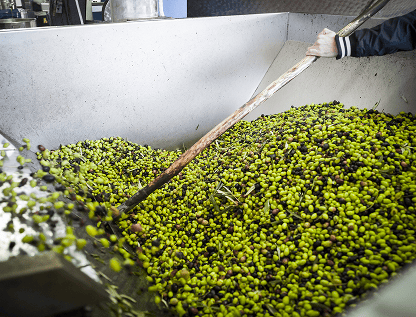
Koroneiki is one of the most important Greek olive varieties for oil production and is widely grown across Crete.
The fruit itself is relatively small, but producers value the variety for the character and quality of the oil it can produce.
Depending on harvest timing, growing conditions and production methods, Koroneiki olive oil can show fresh green aromas, herbaceous notes, noticeable bitterness and a distinctive peppery finish.
Its natural phenolic profile can also contribute to the bitterness and pungency often found in fresh extra virgin olive oil.
If you would like to understand why these sensations matter, read our guide to polyphenols in olive oil.
Tsounati Olives
Tsounati is another variety with a long association with Crete, particularly in parts of the island where traditional olive groves have survived for generations.
The importance of both varieties is reflected in the official specification for the protected geographical indication Kriti.
Under that specification, at least 90% of the olives used for olive oil carrying the protected name must come from Koroneiki or Tsounati olives, or a combination of the two.
What Is Kriti PGI Olive Oil?
In September 2025, the European Union registered Κρήτη / Kriti as a Protected Geographical Indication for extra virgin olive oil.
This was an important formal recognition of the connection between Cretan olive oil and the island where it is produced.
The official specification does much more than simply state that the oil comes from Crete.
For olive oil carrying the Kriti PGI name:
- the olives must be grown in Crete,
- at least 90% must be Koroneiki or Tsounati, or a combination of the two,
- the olives must be processed within the defined geographical area,
- the olive oil must meet specific chemical requirements,
- the oil must meet defined sensory requirements,
- packaging must take place within the geographical area.
The specification sets a maximum acidity of 0.6% for Kriti PGI extra virgin olive oil, alongside additional chemical and sensory requirements.
It also requires measurable fruitiness, bitterness and pungency, with no sensory defects.
This is particularly interesting because it translates the historical reputation of Cretan olive oil into modern standards covering origin, traceability and product characteristics.
You can read the official European Union registration of Kriti PGI on EUR-Lex.
Why Is Olive Oil So Important in Cretan Food?
In many kitchens, olive oil is one of several cooking fats.
Traditional Cretan cooking gives it a much more central role.
Olive oil has long accompanied vegetables, pulses, bread, grains, fish, cheeses and many of the simple foods associated with Mediterranean eating.
It is used for cooking, dressing vegetables, preparing pulses, roasting, baking and finishing dishes at the table.
This everyday use matters.
Olive oil in Crete was not traditionally treated as a luxury ingredient reserved for special occasions. It formed part of ordinary meals and household food preparation.
That idea remains useful today. Our guide to cooking with extra virgin olive oil explains how you can use EVOO for salads, frying, roasting, baking and finishing food.
Olive Harvesting as Part of Cretan Life
The relationship between Crete and olive oil extends beyond what appears on the plate.
For generations, olive groves have formed part of family land and rural livelihoods across the island.
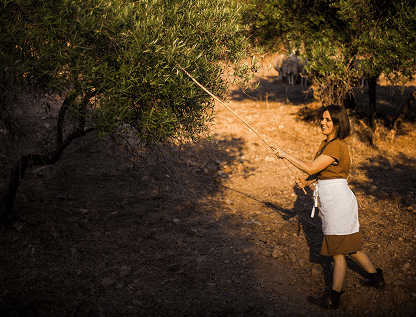
Harvest season brings activity back into the groves. Families, workers and producers gather the fruit and move it quickly towards the mill.
Modern equipment has changed the way many olives are harvested and processed, but the importance of timing remains.
Healthy fruit needs careful handling. Long delays, damaged olives and poor storage before milling can negatively affect the quality of the resulting oil.
This is why good olive oil begins long before extraction.
It begins with the condition of the fruit and the decisions made in the grove.
You can follow that journey in our guide to how organic extra virgin olive oil is made from grove to bottle.
How Has Cretan Olive Oil Production Changed?
Ancient producers understood the importance of the olive tree, but modern olive oil production gives growers and millers far greater control over what happens after harvest.
Today’s producers can control factors such as:
- the time between harvesting and milling,
- the condition of the fruit entering the mill,
- extraction temperature,
- malaxation time,
- exposure to oxygen,
- filtration and settling,
- storage conditions,
- protection from light and heat.
These controls help modern producers protect freshness, aroma and the chemical characteristics of the finished oil.
Technology has changed enormously since the Minoan period, but one principle has remained remarkably consistent.
The quality of olive oil begins with the olives.
How Does Organic Olive Farming Fit into the Cretan Tradition?
Organic olive farming adds a modern certification system to a very old agricultural landscape.
Certified organic production follows defined rules covering cultivation, permitted inputs, handling, documentation and traceability.
This means organic olive oil is not simply olive oil described as natural.
Organic status refers to a regulated production system.
For olive growers, this involves managing the grove within organic standards while responding to the same challenges that have always shaped agriculture in Crete, including soil, rainfall, pests, disease and the timing of harvest.
For consumers, certification adds another layer of information about how the olives were grown and handled.
If you want to understand the difference between organic claims and certified production, read our guide to what organic olive oil really means.
Does Olive Oil from Crete Automatically Mean High Quality?
No.
Crete provides an exceptional historical and agricultural setting for olive cultivation, but geography alone cannot guarantee outstanding olive oil.
Quality still depends on what happens in the grove and at every stage after harvesting.
Important factors include:
- olive variety,
- fruit health,
- harvest timing,
- handling during harvest,
- speed of transport to the mill,
- extraction conditions,
- storage,
- protection from light, heat and oxygen.
This distinction matters because origin and quality are related, but they are not identical.
A recognised olive growing region provides context. Careful production turns good fruit into good extra virgin olive oil.
If you are comparing bottles, our guide to how to choose a good extra virgin olive oil explains what to look for in origin, harvest information, acidity, polyphenols, packaging and flavour.
Why Does Koroneiki Work So Well in Cretan Olive Oil?
Koroneiki has become closely associated with Greek olive oil because it combines practical agricultural qualities with the ability to produce distinctive extra virgin olive oil.
The olives are small, but size alone says little about the quality of the oil inside them.
When growers harvest healthy Koroneiki fruit and producers process it carefully, the resulting oil can show pronounced fruitiness, green aromas, bitterness and peppery pungency.
The final character still depends on many variables, including ripeness, location, weather, extraction and storage.
This means Koroneiki does not produce exactly the same olive oil everywhere.
The variety and the place work together.
What Makes Cretan Olive Oil Different?
There is no single flavour that defines every olive oil made in Crete.
The island contains many growing areas, elevations and microclimates, and producers work with different harvest times and production styles.
However, several characteristics help explain the identity of Cretan olive oil as a category:
- thousands of years of olive cultivation,
- a Mediterranean climate well suited to olive trees,
- the widespread presence of Koroneiki,
- strong local knowledge of olive cultivation,
- a food culture in which olive oil plays an everyday role,
- modern production methods that allow greater control over quality,
- growing emphasis on traceability and certified origin.
Together, these elements explain why Crete and olive oil have become so closely connected.
Euthis and the Cretan Olive Oil Tradition
For Euthis, Crete is not simply a country of origin statement on the label.
Our organic extra virgin olive oil comes from a single estate in the Messara region of southern Crete and is made exclusively from Koroneiki olives.
Using olives from one estate and one harvest provides clear provenance and avoids blending fruit from unrelated growing areas.
The olives are processed within hours of harvesting and the oil is cold extracted below 27°C. Careful handling continues through storage and packaging to protect its freshness and character.
Euthis combines this modern approach to traceability and quality control with a crop that has shaped Cretan life for thousands of years.
That connection is one of the reasons we believe origin should mean more than a place name.
It should tell you something about the land, the olive variety, the people who grow it and the way the oil reaches the bottle.
A Cretan Story That Continues Today
The history of olive oil in Crete did not end with the Minoans.
It continues every harvest season.
Ancient storage vessels have given way to stainless steel tanks. Traditional presses have largely given way to modern extraction systems. Laboratory testing now allows producers to measure characteristics that earlier generations could only judge through experience.
But the olive tree remains at the centre of the story.
Crete’s connection with olive oil comes from the combination of landscape, climate, varieties, history, agriculture and food culture.
Few agricultural products are so closely woven into the identity of one place.
That is why Cretan olive oil is not simply oil produced on an island in the Mediterranean.
It is the modern expression of a relationship between people, olive trees and land that has continued for thousands of years.
See similar articles
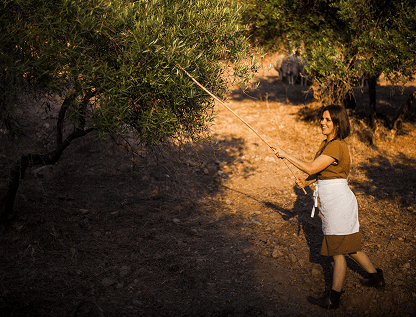
Extra Virgin Olive Oil Guide 09 MARCH 2026
What Does Organic Olive Oil Mean? A Guide to Certification and Labels
Pick up a bottle of olive oil today and you may notice a small green leaf…
Read more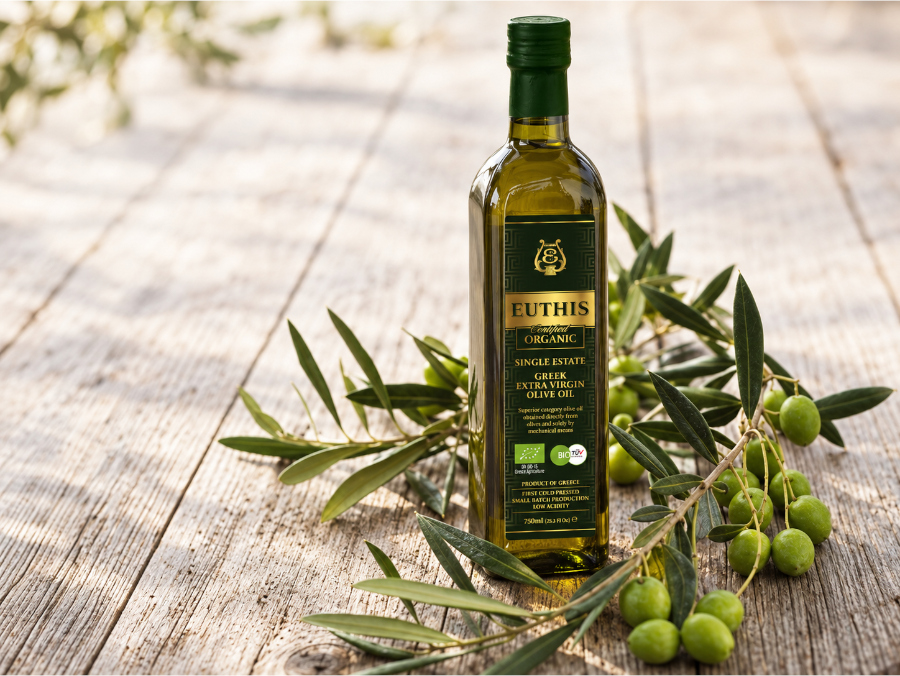
Extra Virgin Olive Oil Guide 07 FEBRUARY 2026
How to Choose a Good Extra Virgin Olive Oil: 10 Things to Look For
You are standing in front of a supermarket shelf filled with olive oil. There may be…
Read more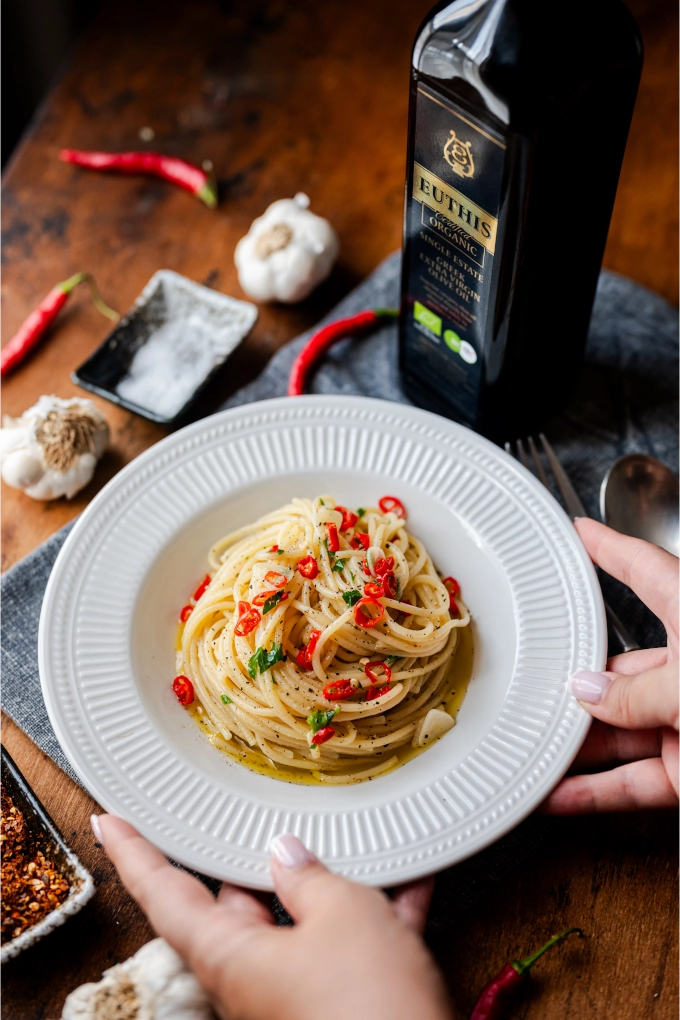
Extra Virgin Olive Oil Guide 18 JANUARY 2026
Cooking with Extra Virgin Olive Oil: How to Use It Every Day
Imagine a simple Mediterranean dinner. Ripe tomatoes, fresh herbs, a piece of good bread and a…
Read more

EUTHIS combines organic cultivation, Koroneiki single varietal character, cold extraction, and single estate traceability. It is produced with clear standards and handled to protect freshness through to final packaging.