




Fatty Acids in Olive Oil: What You Should Know
For many years, people viewed all dietary fats in much the same way. Today, we know that the type and quality of fat matter just as much as…
22 NOVEMBER 2025Fatty Acids in Olive Oil: What You Should Know
For many years, people viewed all dietary fats in much the same way. Today, we know that the type and quality of fat matter just as much as…
22 NOVEMBER 2025
Table of contents
- What Are Fatty Acids?
- Which Fatty Acids Are Considered the Most Beneficial?
- What Fatty Acids Does Olive Oil Contain?
- Why Is Organic Extra Virgin Olive Oil So Special?
- What Happens to Fatty Acids During Heating?
- Why Does Olive Oil Change Over Time?
- Do All Olive Oils Have the Same Fatty Acid Profile?
- What Is the Difference Between Fatty Acids and Olive Oil Acidity?
- Summary
For many years, people viewed all dietary fats in much the same way. Today, we know that the type and quality of fat matter just as much as the amount we consume.
So what is olive oil actually made of? Around 98 to 99% of olive oil consists of triglycerides. These molecules contain fatty acids attached to glycerol and form the main component of the oil. The fatty acid profile strongly influences its nutritional properties, stability and behaviour during cooking.
Although the term fatty acids may sound technical, they are simply fundamental components of dietary fats. Different foods contain different fatty acids in different proportions. These differences affect both their physical properties and their nutritional characteristics.
This is why nutrition experts distinguish between saturated, monounsaturated and polyunsaturated fats rather than treating all fats as the same.
What Are Fatty Acids?
Fatty acids are important components of fats in our diet. The human body uses fats for energy and incorporates fatty acids into cell membranes. They also take part in many normal biological processes.
We can divide the main fatty acids found in food into three broad groups.
Saturated Fatty Acids
Saturated fatty acids have a chemical structure that makes them relatively resistant to oxidation. Foods such as butter, fatty meat, coconut oil and palm oil contain significant amounts of saturated fat.
Current UK dietary guidance recommends limiting saturated fat and replacing some of it with unsaturated fats. The NHS provides further guidance on the different types of dietary fat and their role in a balanced diet.
Monounsaturated Fatty Acids
Monounsaturated fatty acids, often shortened to MUFAs, form the dominant type of fat in olive oil. Oleic acid is by far the most important of these in most olive oils.
Olive oil is therefore an important dietary source of monounsaturated fat. Replacing some saturated fats with unsaturated fats can also help maintain healthier blood cholesterol levels.
Polyunsaturated Fatty Acids
Polyunsaturated fatty acids include the omega-3 and omega-6 families. The body cannot produce the essential fatty acids linoleic acid and alpha-linolenic acid, so we need to obtain them from food.
Polyunsaturated fatty acids perform important biological functions. Their structure also makes them generally more susceptible to oxidation than monounsaturated and saturated fatty acids.
The proportions of these different fatty acids influence the nutritional profile of a fat. They also affect its stability during storage and cooking.
Which Fatty Acids Are Considered the Most Beneficial?
Health authorities generally recommend replacing some saturated fat with unsaturated fat. This includes both monounsaturated and polyunsaturated fatty acids.
Olive oil contains a particularly high proportion of monounsaturated oleic acid. This fatty acid profile is one reason olive oil plays such an important role in the traditional Mediterranean diet.
Polyunsaturated fats are also important. Omega-6 linoleic acid and omega-3 alpha-linolenic acid are essential fatty acids because the body cannot make them itself.
Trans fats have a very different nutritional profile. Industrially produced trans fats can negatively affect blood cholesterol and cardiovascular health. Extra virgin olive oil naturally contains only negligible amounts of trans fatty acids.
What Fatty Acids Does Olive Oil Contain?
This is where olive oil differs noticeably from many other commonly used plant oils.
The exact fatty acid profile varies according to olive variety, climate, growing conditions and harvest timing. However, a typical olive oil contains approximately:
- 55 to 83% oleic acid, a monounsaturated fatty acid
- 3.5 to 21% linoleic acid, an omega-6 fatty acid
- Up to around 1% alpha-linolenic acid, an omega-3 fatty acid
- Smaller proportions of saturated fatty acids, mainly palmitic and stearic acid
The olive variety and its growing environment can significantly influence these proportions. Learn more about how the growing region influences olive oil here.
Oleic acid usually represents the largest proportion. Its relatively high oxidative stability contributes to the stability of olive oil during storage and cooking.
Why Is Organic Extra Virgin Olive Oil So Special?
The fatty acid profile is only part of what makes extra virgin olive oil distinctive. Unlike refined olive oils, extra virgin olive oil retains many naturally occurring minor compounds because producers obtain it directly from olives by mechanical means.
These compounds include polyphenols, vitamin E, squalene and other naturally occurring substances. Polyphenols in particular contribute to oxidative stability, bitterness and the characteristic peppery sensation of many fresh extra virgin olive oils.
The concentration of these compounds can vary considerably between oils. Olive variety, harvest timing and processing methods all play a role. Read more about polyphenols in extra virgin olive oil here.
Organic certification adds a separate consideration. It relates primarily to how farmers grow the olives and the agricultural standards they follow. It does not automatically guarantee a particular fatty acid or polyphenol level.
What Happens to Fatty Acids During Heating?
Many consumers wonder whether heating olive oil damages its fatty acids or makes it unsuitable for cooking.
Heat gradually promotes chemical changes in all cooking oils. Temperature, heating time, oxygen exposure and the fatty acid composition all influence the rate of oxidation.
Olive oil contains a high proportion of monounsaturated oleic acid and relatively fewer polyunsaturated fatty acids than many seed oils. Extra virgin olive oil also contains natural antioxidants. Together, these characteristics give it good oxidative stability during normal cooking.
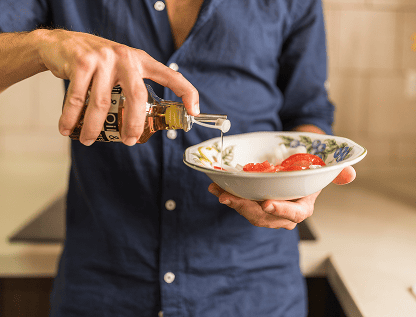
For this reason, high-quality extra virgin olive oil works well for dressings, roasting, sautéing and everyday frying. It can also be enjoyed uncooked as a finishing oil, where its natural aroma and flavour remain especially noticeable. A simple example is our Bruschetta Romana recipe, finished with extra virgin olive oil, ripe tomatoes and fresh basil.
Repeated overheating is a different matter. Using any oil many times at high temperatures accelerates degradation and gradually reduces its quality.
Why Does Olive Oil Change Over Time?
Extra virgin olive oil begins to change gradually after production. Unlike wine, olive oil does not improve with age. Freshness therefore matters.
Light, oxygen and heat accelerate oxidation. Over time, this process can weaken the oil’s aroma, flavour and natural antioxidant content.
Good producers therefore protect olive oil from these factors during storage. Stainless steel tanks offer excellent protection before bottling. Dark glass bottles and metal tins can then reduce exposure to light during distribution and storage.
Do All Olive Oils Have the Same Fatty Acid Profile?
No. Olive oils share some broad characteristics, but their exact fatty acid composition can vary considerably.
Several factors influence the final profile:
- Olive variety
- Growing region
- Climate and environmental conditions
- Harvest timing
- Fruit maturity
For example, the Koroneiki variety commonly grown in Crete typically produces oil rich in oleic acid. However, composition still varies from one harvest and growing area to another.
What Is the Difference Between Fatty Acids and Olive Oil Acidity?
This distinction often causes confusion. The fatty acid profile describes the different fatty acids that make up most of the oil’s fat. Free acidity measures something different: the proportion of fatty acids that are no longer bound within triglycerides.
Higher free acidity can result from damaged olives, poor storage or delays before milling. This is why acidity serves as one of several important quality parameters for extra virgin olive oil. Learn more about what olive oil acidity means here.
Summary
Fatty acids form the structural foundation of the triglycerides that make up almost all olive oil. Their proportions influence the oil’s nutritional characteristics, stability and behaviour during cooking.
One of the defining characteristics of olive oil is its high proportion of monounsaturated oleic acid. Extra virgin olive oil also contains valuable minor compounds, including polyphenols, vitamin E and squalene.
When choosing an olive oil, look beyond a single figure on the label. Consider the olive variety, origin, freshness, production methods, storage and acidity. Together, these factors provide a much clearer picture of the quality of the oil.
See similar articles
Extra Virgin Olive Oil Guide 12 DECEMBER 2025
Polyphenols in Olive Oil: Why Are They So Valuable for Health and Quality?
Imagine tasting a truly fresh extra virgin olive oil for the first time. First comes a…
Read more
Extra Virgin Olive Oil Guide 01 OCTOBER 2025
How Is Organic Extra Virgin Olive Oil Made? A Story That Begins in the Olive Grove
Imagine an autumn morning on the island of Crete. Beneath the silver-green canopy of olive trees,…
Read more
Extra Virgin Olive Oil Guide 01 SEPTEMBER 2025
How the Growing Region Influences the Taste and Quality of Olive Oil
When tasting a fine wine, we often hear that its unique character comes from the place…
Read more

EUTHIS combines organic cultivation, Koroneiki single varietal character, cold extraction, and single estate traceability. It is produced with clear standards and handled to protect freshness through to final packaging.